
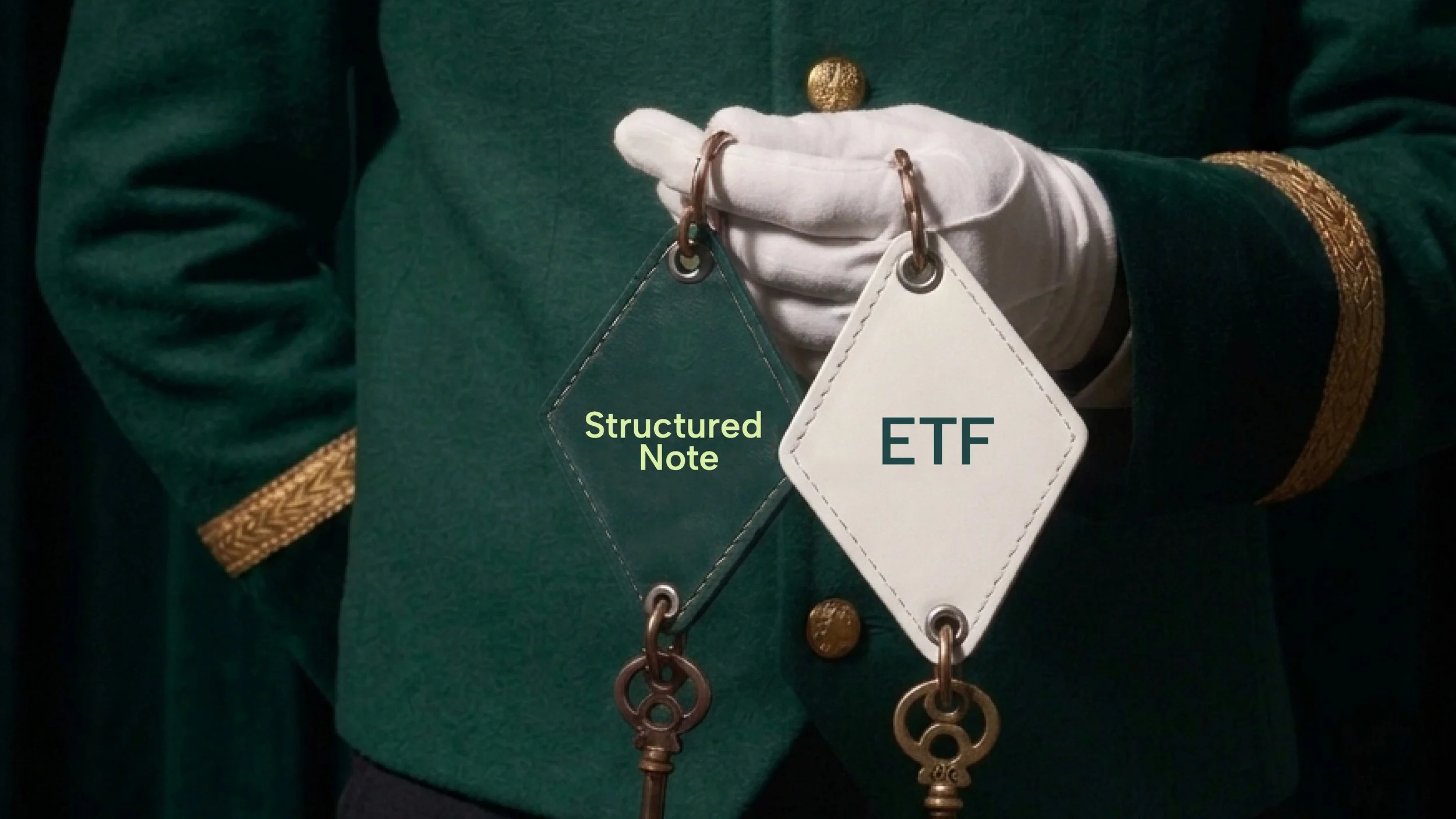
Structured notes and exchange-traded products (ETPs) both give investors packaged exposure to a market, and they work very differently. A structured note sets its payoff in advance. An ETP follows the market as it moves. Both earn a place in sophisticated portfolios, and knowing which suits which role is where good allocation starts. Here is a side-by-side comparison, three differences that matter, and a twist at the end.
The Landscape
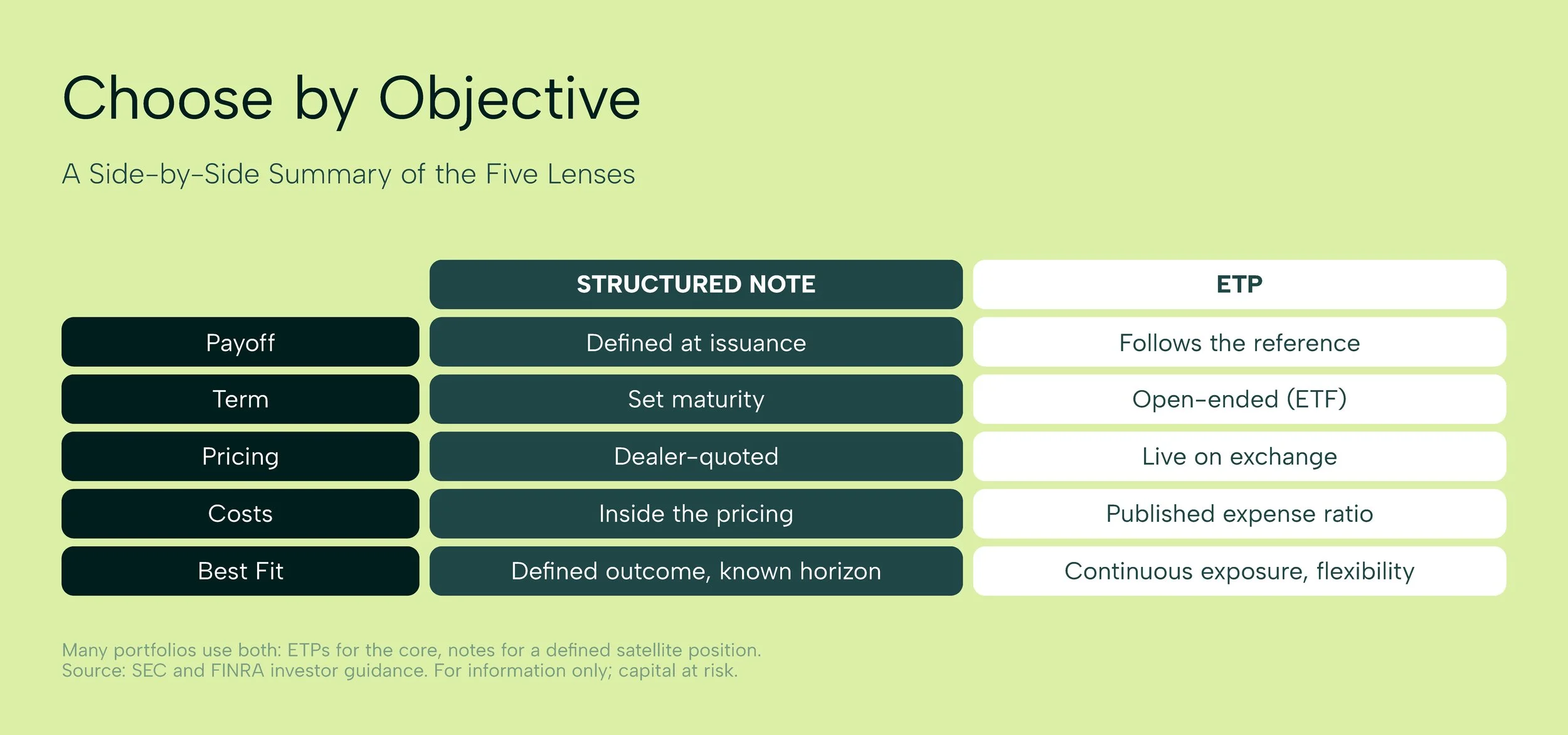
Both categories have grown into pillars of modern wealth management. ETFGI reports global ETF assets of US$24.03 trillion at the end of August 2026, across 17,713 funds. Structured Retail Products (SRP) estimates US structured note issuance at about US$180 billion in notional across 53,700 notes in 2025. The figures measure different things, assets held versus a year of issuance, and together they show how firmly investors favor packaged, rules-based exposure.
Difference 1: How they are built
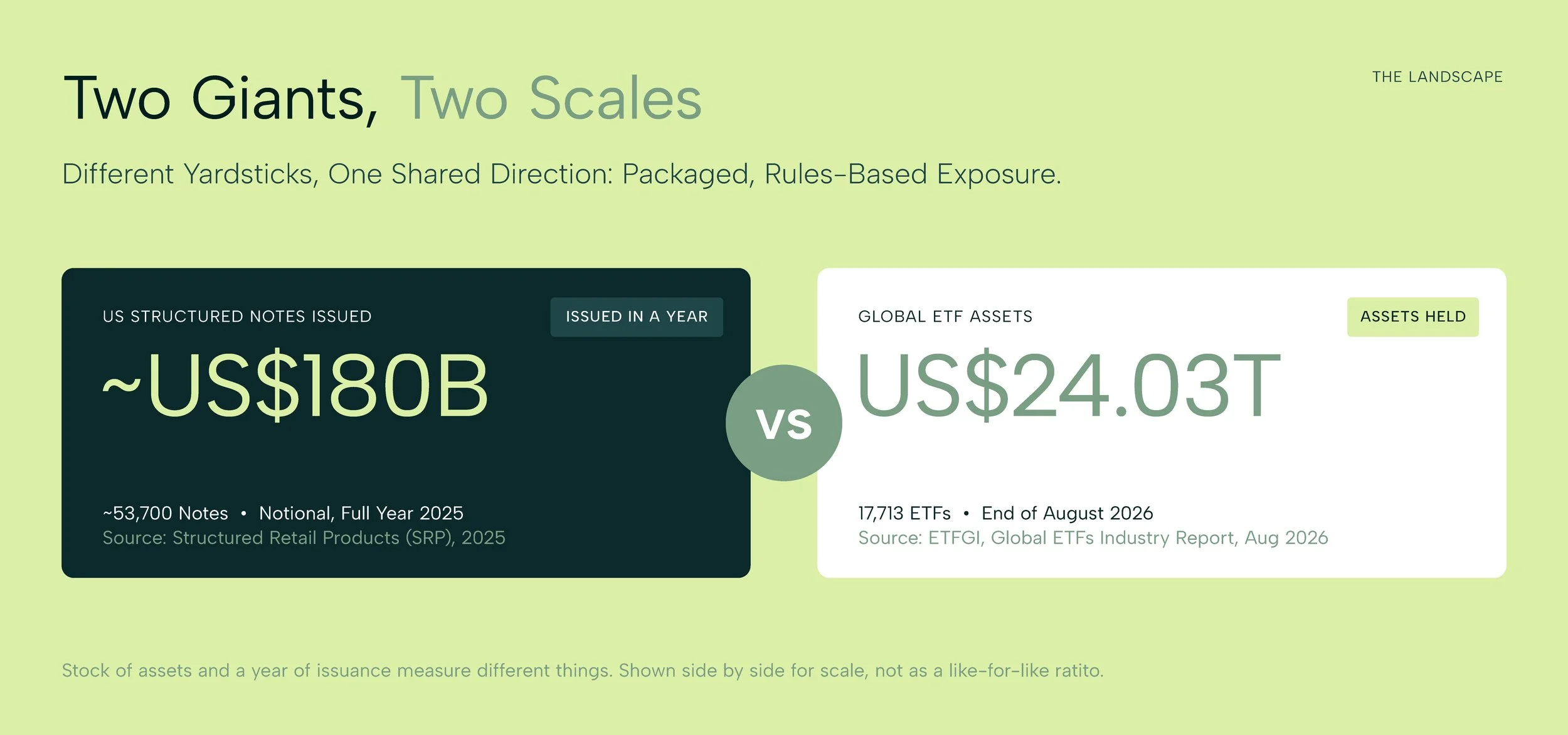
Structured note: payoff set in advance. The SEC describes a structured note as a debt instrument issued by a financial institution, combining a bond with an embedded derivative so its return links to an index, a basket or another reference (SEC Investor Bulletin, 2015). The terms, including the reference asset, participation level, any cap or buffer, and the maturity date, are written at issuance. The payoff is known from the start.
ETP: follows the market. FINRA groups ETPs into ETFs, which hold assets, and ETNs, which are debt obligations of an issuer. An ETF uses a creation and redemption process with authorized participants to keep its share price close to the value of its holdings. Performance reflects the market day by day. The ETP tracks the market.
Difference 2: How they trade
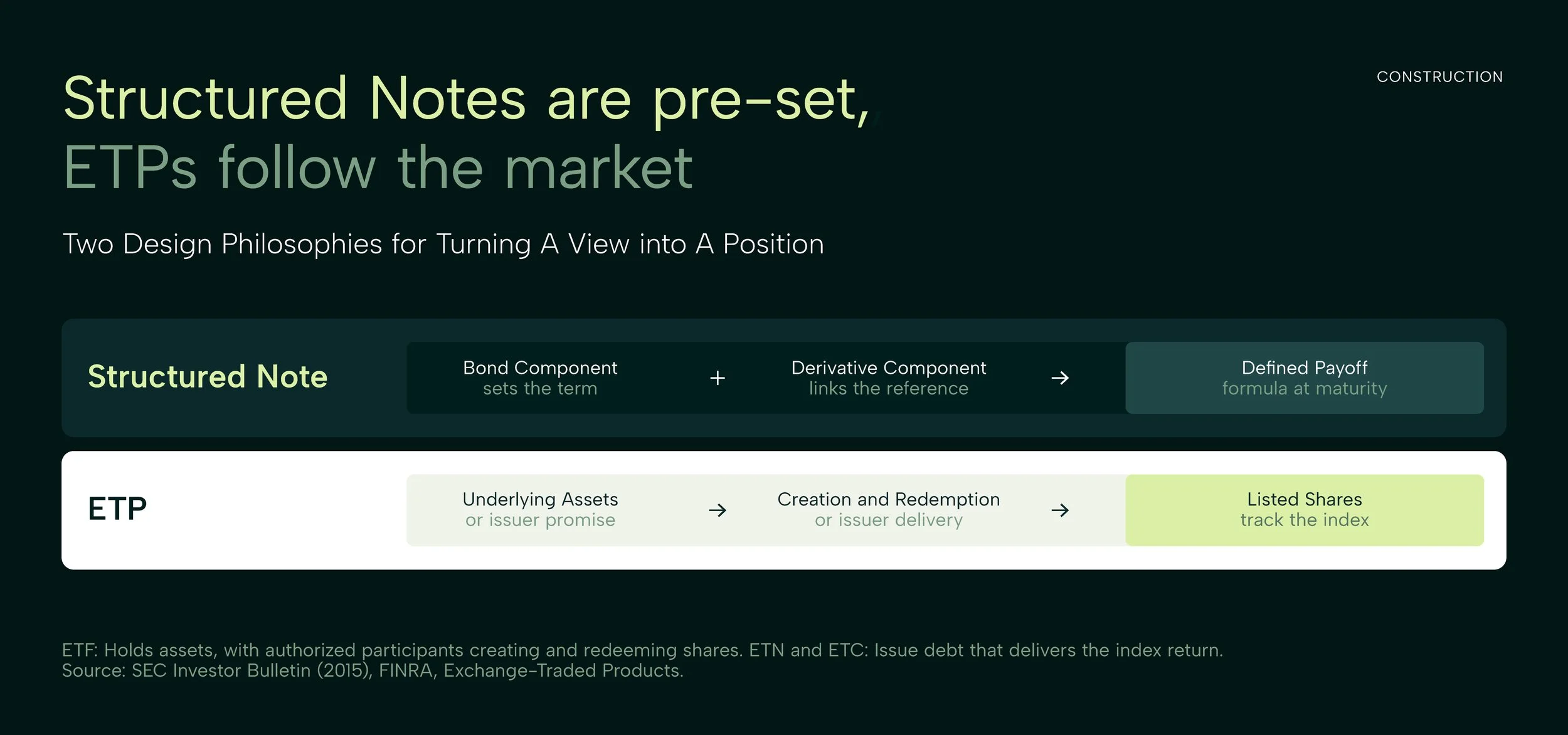
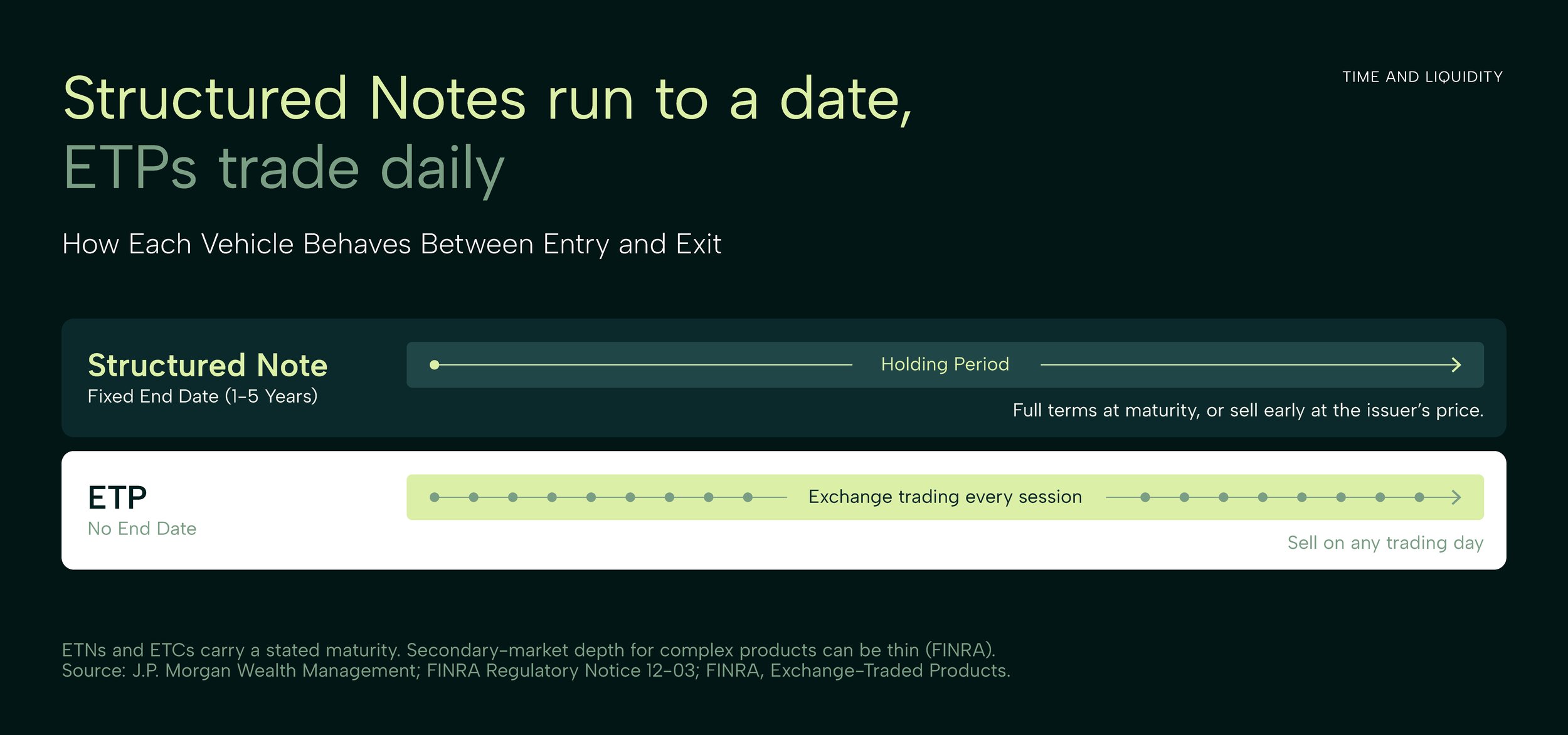
A structured note carries a set maturity, typically one to five years according to J.P. Morgan Wealth Management, and its full terms apply when held to that date. Before then, secondary liquidity depends on a dealer's willingness to quote a price, and FINRA's guidance on complex products highlights that these secondary markets can be thin.
ETPs trade on an exchange throughout the session. ETF liquidity works in two layers: the shares visible on screen, and the creation and redemption mechanism behind them that adds capacity when demand rises. Open-ended ETFs have no end date, while ETNs and ETCs carry a stated maturity. In practice, a note rewards patience and a clear horizon, and an ETP rewards flexibility.
Difference 3: Who stands behind them
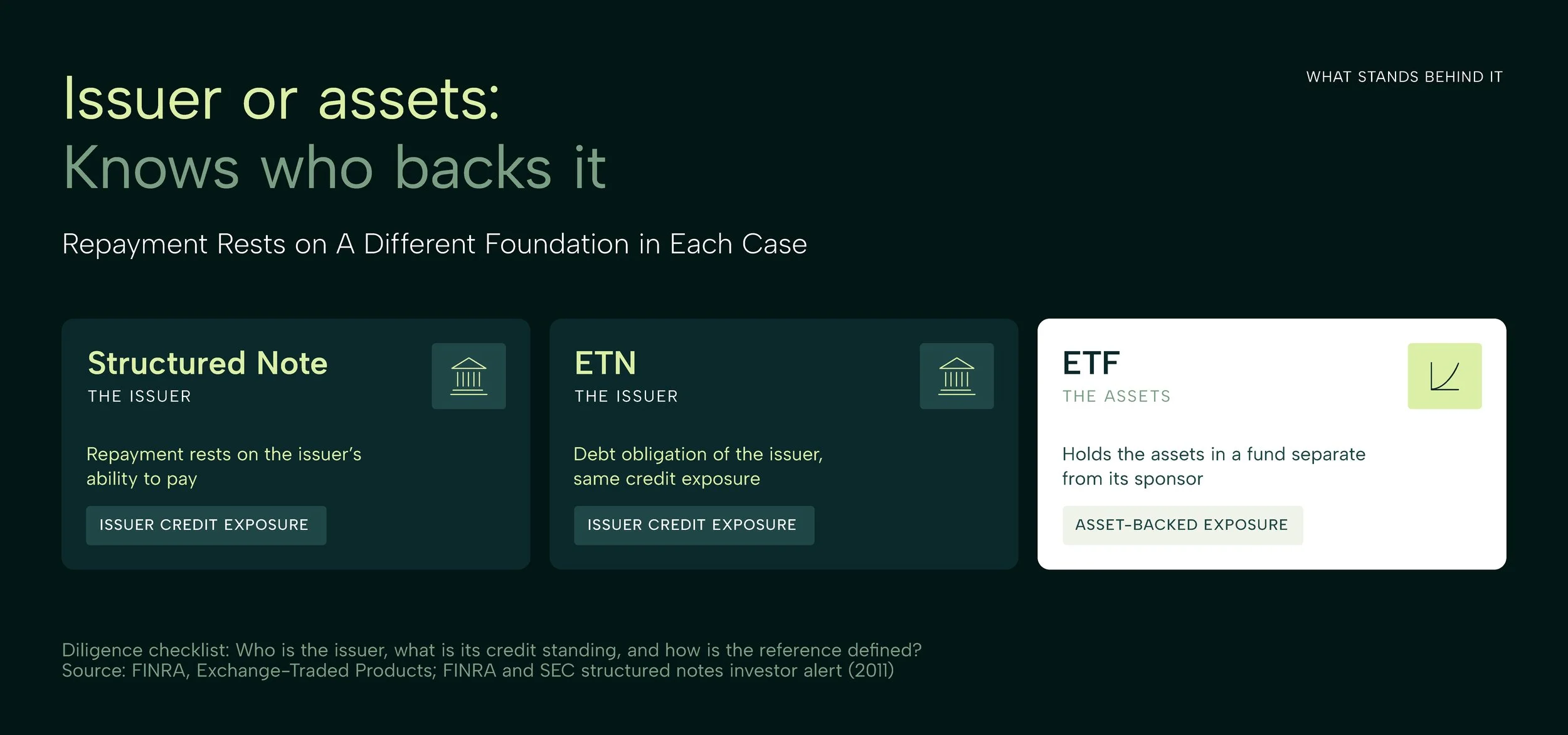
Structured note: the issuer. Repayment rests on the issuer's ability to pay. The 2008 failure of Lehman Brothers, a large issuer of notes at the time, remains the reference case for why issuer strength matters (FINRA and SEC investor alert, 2011).
ETP: depends on the type. ETNs share the issuer feature, as FINRA notes. An ETF holds the underlying assets inside a fund structure that sits apart from its sponsor. Because the foundations differ, diligence differs too: confirm who the issuer is, review its credit standing, and read how the product defines its reference.
The Twist: The smartest portfolios own both
The twist: the question is rarely which one, because each plays a different role. A defined outcome, a known time frame or a tailored payoff points toward a structured note. Continuous exposure, daily pricing and portfolio flexibility point toward an ETP.
Costs differ in form as well. ETPs publish an expense ratio, whereas a note's costs sit inside its pricing, which is why FINRA and the SEC encourage investors to compare a note's estimated value with its issue price.
Many portfolios pair the two: ETPs for the core allocation, notes for a defined satellite position. Sizing then follows the role each plays, with notes held to the horizon they were designed for and ETPs adjusted as the market view evolves.
The Takeaway
Three questions guide the choice: what outcome is wanted, how long the capital can stay committed, and who stands behind the instrument. Clear answers turn a complex menu into a confident decision. Explore more MYJ insights to continue the series.
Sources: SEC Office of Investor Education, Investor Bulletin: Structured Notes (Jan 2015). FINRA, Exchange-Traded Products investor page. FINRA, Regulatory Notice 12-03 (Complex Products, 2012). FINRA and SEC, structured notes investor alert (2011). ETFGI, Global ETFs industry report, end of August 2026. Structured Retail Products (SRP), US structured notes issuance, 2025. J.P. Morgan Wealth Management, structured notes overview.
For information only. Not investment advice or an offer. Structured notes and ETPs carry market, issuer credit and liquidity risk, and capital is at risk. Figures use different methodologies and are shown for context.
